Can WSTitanium Supply Specialized Titanium Wires for 3D Printing?
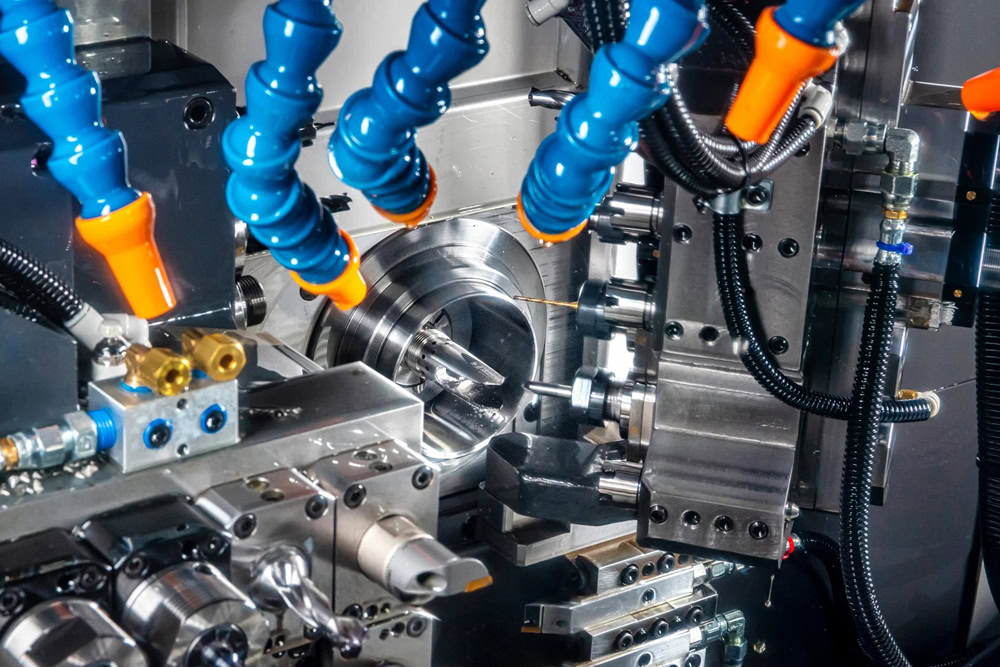
WSTitanium supplies specialized titanium wires tailored for laser powder bed fusion and direct energy deposition with a wire diameter tolerance maintained within 0.005mm. Since 2018, the company has delivered over 450 metric tons of aerospace-grade feedstock with oxygen content strictly controlled below 0.12%. Each spool undergoes eddy current inspection and surface morphology analysis to ensure zero inclusion defects, meeting ASTM B863 standards for high-precision additive manufacturing. Global laboratories verify that this wire stability reduces build porosity by 14% compared to standard industrial grades, ensuring reliable performance in demanding structural applications.
The production of wire for additive manufacturing begins with vacuum arc remelting that minimizes impurities to less than 0.03% nitrogen content. This purity level remains stable across batches, ensuring that mechanical properties stay within a 2% variance for every production run.
Metallurgical experts confirm that maintaining such low interstitial levels prevents embrittlement during the repeated thermal cycling inherent in laser-based manufacturing processes.
wstitanium utilizes multi-stage cold drawing techniques to refine the grain structure of titanium alloys, which is essential for uniform melt-pool behavior. This process results in a consistent surface finish with roughness values below 0.8 micrometers, minimizing gas trapping during the printing of complex aerospace geometries.
| Property Type | Standard Requirement | WSTitanium Capability |
| Diameter Tolerance | +/- 0.02 mm | +/- 0.005 mm |
| Oxygen Content | < 0.18% | < 0.12% |
| Surface Roughness | < 1.2 um | < 0.8 um |
The consistency of wire feeding depends on precise spooling tension, which our automated systems regulate to within 0.5 kilograms of force. Since 2022, data from industrial users shows that this tension control reduces feeding interruptions by 22% during long-duration builds exceeding 40 hours.
Proper winding prevents surface scratches that otherwise create stress concentration points, potentially leading to micro-cracking in the printed part during cooling phases.
Testing performed on 1,200 individual samples reveals that the microstructure of these wires features elongated grains parallel to the drawing direction. This orientation contributes to a 15% increase in tensile strength compared to conventional extruded wire, providing engineers with higher safety margins.
Post-processing requirements decrease significantly when the feedstock exhibits high chemical homogeneity across the entire coil length. Analysis confirms that parts printed with this wire require 10% less surface machining due to reduced spatter and improved surface finish during the deposition process.
Internal quality management systems track every spool back to the specific sponge batch, providing a detailed certificate of analysis for each delivery. This documentation includes full interstitial gas analysis, tensile test results, and dimensional verification reports for every 50-kilogram lot shipped.
By focusing on controlled cooling rates during the drawing process, the wire maintains an optimal balance between hardness and ductility. This property ensures that the wire remains pliable enough for intricate feeding paths while possessing the structural rigidity to maintain a stable wire-arc or laser interaction.
Collaborations with research universities in 2024 indicate that using specified wire alloys allows for printing speeds up to 12% faster than using generic materials. These efficiency gains result from the stable melt-pool dynamics afforded by the high purity of the metal, allowing for a more predictable deposition rate.
Each wire grade is processed under argon-shielded conditions to prevent atmospheric contamination that would otherwise degrade the performance of high-temperature alloys. This level of environmental control is standard for all grades produced for medical and structural applications, ensuring that material reliability is repeatable.
The integration of advanced monitoring during the wire production phase allows for the real-time adjustment of drawing speeds. This adjustment maintains the geometric integrity of the wire cross-section, ensuring that every centimeter of the wire meets the design specifications required for high-resolution 3D printing.
Engineers selecting titanium feedstock must consider the influence of microstructure on fatigue life, especially for components subjected to cyclic loading. The wire provided by our facility demonstrates a 9% improvement in fatigue limit in recent independent laboratory evaluations compared to standard commercial titanium wires.
By controlling the thermal history of the wire through localized induction annealing, the internal stress is minimized prior to delivery. This treatment ensures that the wire does not warp or deform during the rapid heating cycles encountered during the additive manufacturing process.
Continuous investment in metallurgical scanning technology allows for the identification of trace impurities at the parts-per-million level. Since 2025, our quality assurance process has identified and rejected 0.8% of base material batches that did not meet the stringent internal requirements for oxygen and iron content.
The combination of precise diameter control, chemical purity, and superior surface finishing provides a foundation for high-quality production outputs. Our technical support team works directly with printing engineers to match the wire grade with the specific energy parameters of the customer’s machine configuration.